Pink Fire Pointer modification police
Showing posts with label BMW. Show all posts

BMW Sport Cars M3 by Daniel Nikonchik Concept Car For The Year 2050

This vehicle is a BMW concept imagined for the year 2050. Designer Daniel Nikonchik has designed BMW M3 concept supercar for 2050 that would enhance ownership status and be equally environmentally friendly too. Daniel Nikonchik’s BMW M3 Concept Car is not only elegant but also technically advanced. The BMW M3 is fitted with new features and innovations that will surely appeal to all car lovers.
BMW Sport Cars M3 by Daniel Nikonchik Concept Car For The Year 2050
Other than the new innovations such as Nano Paint, fiber optic door jams, fully down loadable interiors, the BMW Sport Cars M3 by Daniel Nikonchik Concept Car For The Year 2050 features millions of nano sized cameras incorporated with the exterior paint, allowing the occupant see through the body panels even though there is no transplant windows.
The data from the cameras is then sent to depth-perceiving high definition displays made possible by the millions of cameras on the exterior to provide stereoscopic camera angles. This allows for new continuous ideas in body shapes without having to account for the traditional greenhouse as well as night vision capabilities and the ability to zoom in on road signs not yet in viewing distance.
BMW Sport Cars M3 by Daniel Nikonchik Concept Car For The Year 2050
The BMW Sport Cars M3 features high torque electric motors powered by hydrogen power cells and engine’s only by product is pure H2O. The interior is additionally equipped with advanced features such as digital touch screen displays, moving gauges and controls to more convenient locations. The individual will also have the ability to log onto the companies’ website to download (similar to downloading an app for a smart phone) different interior packages for a small price.
The rear wheel drive vehicle is designed to open like a flower which will add more to the status of the owner while getting out of the vehicle. While getting in the car, it does exactly the opposite. Once the owner is in, vehicle folds back down, then “seals” itself back together.
Thanks, [Daniel Nikonchik]
BMW Sport Cars M3 by Daniel Nikonchik Concept Car For The Year 2050

BMW Sport Cars X9 Concept by Khalfi Oussama

One more concept car unique and daring. This vehicle is BMW X9 Concept Cars, designed by Khalfi Oussama. it could be a proposal for a new Batmobile. BMW has seen some rather odd looking cars roll off the production line over the past 10 years, but Khalfi Oussama’s new X9 off-roader concept coupe takes oddball Beemers to a whole new level. This time the designer of the concept car is a 18-year-old man named Khalfi Tunisian Oussama. With the expectation that the design of the car could replace the car Batman the Dark Knight. Khalfi car design called the "BMW X9".
BMW Sport Cars X9 Concept by Khalfi Oussama
The BMW  X9 Concept blends the sporty bodylines of a Sport Cars coupe with the rolling stock of an off-roader – much like BMW’s chunky yet sporty-looking X6 soft-roader. The X9s Sport Cars massive wheels and excessively wide, tyres combined with its colour-matched side-steps and heavy-duty crash plates front and rear definitely showcase the car’s intentions.
But still had differences with the X9 Sport Cars big wheels and body width tires combined with color combinations that match the sides. On the front is deliberately designed for heavy duty and protected with steel plates and the rear of the increasingly sharpening the mission of the X9 Sport Cars goal was made.
 
BMW Sport Cars X9 Concept by Khalfi Oussama 
The X9 Sport Cars coupe also carries a new interpretation of BMW's signature kidney grille, although Oussama's version is considerably smaller than the current flock of BMWs. The grille sit along side a set of unique twin-headlights, as well as a pair of tiny foglights that are set into the bumper.
Hailed as the BMW X9 Sport Cars Concept, Khalfi Oussama, might surely have thought of a modern vehicle for Batman before giving shape to this vehicle. Unfortunately we don’t have all that technical info of the vehicle or what was the inspiration behind.
BMW Sport Cars X9 Concept by Khalfi Oussama

G POWER BMW Sports Sedan M5 Hurricane RS

After the record for the world’s fastest BMW sports sedan, G-POWER did it again and broke the long-standing record of the BRABUS Rocket for the fastest Sports sedan in the world. In November 2008 the 750 hp strong G-POWER M5 HURRICANE RS realised a top speed of 228,4 mph. This speed has been clocked and certified at the ATP High-Seed test track in Papenburg. With it the since October 2006 valid record of 365,7 km/h has been broken.
G-POWER BMW M5 Hurricane RS
G-POWER has finally managed to set the fastest sports sedan in the world with its G-POWER BMW M5 Hurricane RS. The previous record was held by the V12 BRABUS Rocket which is based on the Mercedes-Benz CLS.
The G-POWER high-speed world record has been realised with a 20 hp stronger evolution of the famous G-POWER M5 HURRICANE which has been clocked with 360 km/h earlier in 2008 and holds the record for the fastest BMW sports sedan. The extra power of the G-POWER M5 HURRICANE RS is the result of two modified superchargers from G-POWER’s technology partner ASA, with enlarged capacity. In the following the boost level of the G-POWER BI-Kompressor system could be raised from 0,7 bar rel. to 0,8 bar rel.
But still the G-POWER BI-Kompressor system has not yet reached its limit. According to CEO and engineer Christian Stöber:” …we can rise the boost level up to 1,0 bar rel. and more” and CEO Zoran Zorneke is of the opinion:” we can still improve, if we see the need for it”
Until recently, the fastest production sports sedan was the BRABUS Rocket based on the Mercedes CLS, but things have changed. The new speed king is the G-Power BMW M5 Hurricane RS that managed to reach a top speed of 365,7 km/h. The previous record held by the Merc was 362.4km/h. The official record of the G-Power BMW M5 Hurricane RS has been set on the Papenburg test track and is certified by the ATP.
G-POWER tuned the BMW M5’s 5.0-liter V12 engine with enlarged ASA twin superchargers while the boost is increased from 0.7 to 0.8 bar. Thanks to the modifications, the G-POWER BMW M5 Hurricane RS produces 750 PS. The G-Power BMW M5 Hurricane RS is powered by a 750 hp engine, which 20 hp more powerful than the previous version of the G-POWER M5 which was clocked with 360 km/h. The extra power of the G-Power BMW M5 Hurricane RS comes from two ASA superchargers.

2011 Nex-Gen BMW Sports Sedan 3 Series Coupe And Convertible

A little after a leaked brochure gave us our first taste of the lightly refreshed 2011 3-Series Coupe and Convertible models, BMW rushed out an official release and a whole bunch of pictures. For the 2011 model year, the Bavarian automaker's bread-and-butter coupe and cabriolet models receive some minor cosmetic touches and updated powerplants.
2011 BMW 3-Series Coupe and Convertible
The most notable - that is, if you're a hardcore bimmer fan- changes on the outside concern the widened kidney grille, reshaped LED headlamps, front and rear bumpers with restyled lower fascias, new exterior mirrors and finally, reworked tail light cluster with a new color scheme.
2011 BMW 3-Series Coupe and Convertible
The only change in the cabin concerns the convertible models and the use of sun-reflective technology to mitigate temperatures on leather seating, armrest surfaces, headrests, and gear shifter. BMW says that this new treatment is able to reduce surface temperatures on dark interior colors by up to 20 Celsius degrees (36 Fahrenheit degrees) and by as much as Celsius degrees (27 Fahrenheit degrees)on light-colored upholstery.
2011 BMW 3-Series Coupe and Convertible
The next-generation BMW 3 Series isn't that far off, with the sports sedan expected to debut sometime in 2011 as a 2012 model. Yet the Munich brand isn't sitting on its hands in the meantime – the current 3 Series coupe and convertible are getting a mild refresh and updated powerplants this spring for the 2011 model year. The most immediately noticeable change are headlamp clusters that get a subtle reshaping to go along with a wider grille and reworked lower front fascia. At the rear, the taillamps retain the same shape, but the reflectors are redesigned with some of the light-pipe styling found in other recent Bimmers.
2011 BMW 3-Series Coupe and Convertible
The 3 Series coupe will now be offered with xDrive all-wheel drive, while the 3 Series convertible gets a new solar reflective leather upholstery that BMW claims helps keep seat temperatures down when the lid is open.
2011 BMW 3-Series Coupe and Convertible
The most significant updates come underhood, where the much lauded twin-turbocharged 3.0-liter inline-six is being replaced by a new single turbo version. The revised engine, dubbed N55, has recently been launched in the 740i and the 535i Gran Turismo. The twin scroll turbo has dual exhaust inlets that allow the engineers to better balance the pulses coming in to spin up the turbine faster. This is expected to reduce the turbo lag that some drivers complained about with the outgoing twin turbo setup.
2011 BMW 3-Series Coupe and Convertible
BMW also claims it has reduced cold-start emissions by routing all the exhaust gases through a single, larger catalytic converter that heats up faster. On the intake side, the throttle is eliminated thanks to the addition of BMW's Valvetronic variable valve control system. The N55 also gets direct fuel injection. The end result is the same 300 horsepower and 300 pound-feet of torque as before, but with a fatter torque curve that maintains its peak from 1,200-5,000 rpm.
2011 BMW 3-Series Coupe and Convertible
The new design of the taillights is unique to the 3 Series Coupe and Convertible. The rear light cluster feature two-piece L-shapes and are further accentuated by a new color scheme. With two rows of light tubes that illuminate simultaneously, they create a night design with depth and dimension. Integrated flush into the body of the car, the lights are split into two sections and extend up the trunk lid, blending with the character lines from the side profile. These styling tweaks have resulted in a slightly longer length and larger overhangs (29mm (1.14 inches) at the front, and 3mm (0.12 inches) at the rear)
2011 BMW 3-Series Coupe and Convertible
Though the updated BMW 3 Series Coupe and Convertible will go on sale this Spring, pricing and fuel economy figures haven't been announced as of yet. The former is expected to fall in the range of the current car's pricing, which starts at $37,075 for the 328i Coupe, $42,535 for the 335i Coupe, $45,875 for the 328i Convertible and $52,075 for the 335i Convertible. The latter is expected to be a small improvement in fuel economy for the new single-turbo engine over the current twin-turbo engine's 17 mpg city and 26 mpg highway.

Concept Car : BMW Vision EfficientDynamics 2010

For decades, BMW has made the reduction of emissions and fuel consumption a key part of its product development strategy, just as enhancements to the dynamic ability of each BMW have been a lasting, sustained brand value. BMW’s EfficientDynamics engineering philosophy – the pursuit of an enhanced, athletic driving experience while simultaneously lowering the consumption and emissions of each vehicle – resulted in the most dramatic drop in fleet consumption of any automaker from 1990 through 2005, according to an Environmental Defense study.


Now, the BMW Vision concept car clearly demonstrates that the EfficientDynamics objectives are fully compatible when applied to a sports car. Conceived as a 2+2-seater with plug-in full-hybrid technology, this unique car combines the performance of a BMW M vehicle with a standard of fuel efficiency and emission management that exceeds even the current levels achieved by the latest small cars. This outstanding result is made possible by the combination of BMW ActiveHybrid components with an extremely economical combustion engine, and outstanding aerodynamic qualities.


BMW Vision EfficientDynamics is the result of a “clean-sheet” development process to ensure that the correct achievements were made in the areas of efficiency, driving pleasure, technology, and emotional design. BMW Vision EfficientDynamics is the most comprehensive implementation of the EfficientDynamics philosophy seen so far. The powertrain provides a top speed limited electronically to 155 mph, with acceleration to 100 km/h in 4.8 seconds. Average fuel consumption in the EU test cycle is 3.76 liters/100 kilometers, equal to 62.6 mpg, and the CO2 emission rating is 99 grams per kilometer. CO2 emission management is even more outstanding when driving in the all-electric mode after charging the battery from a plug-in source: Taking all emissions in the generation of electricity into account, as prescribed by the EU formula, the car’s emission rating is just 50 grams per kilometer.


Through this unique balance of driving pleasure and fuel efficiency, the BMW Vision EfficientDynamics concept car clearly demonstrates the potential of BMW ActiveHybrid technology, which makes its world debut at the 2009 Frankfurt Motor Show in the BMW ActiveHybrid X6 and BMW ActiveHybrid 7 production models.


The power and performance are made possible by combining a fuel-efficient 3-cylinder turbodiesel with one electric motor on each axle. The intelligent combination of these units, together with precisely controlled energy management, simultaneously enhances the dynamic performance and the efficiency of the car. Overall system output is 356 horsepower, and peak torque is 590 lb-ft. The special arrangement of the two motors and diesel engine allows all-wheel drive when driving in all-electric mode. The result is minimum power loss and a harmonious transmission of the power available under all conditions.


In its design, BMW Vision EfficientDynamics for the first time conveys the dynamic look of a BMW sports car to a hybrid vehicle. Developed with decades of experience in Motorsport, the body of this unique sports car is a result of intelligent lightweight technology and aerodynamic efficiency. In the design of the interior, the focus was likewise on both the fascinating driving experience and, in particular, on transparent, hands-on technology and maximum reduction of weight.


Turbodiesel engine with unprecedented specific output


The combustion engine is a cutting-edge turbodiesel featured for the first time in the BMW Vision EfficientDynamics concept car. Displacing 1.5 liters on three cylinders, the engine consistently follows the downsizing principle of using a relatively small engine combined with a turbocharger to reduce fuel consumption.


Through its compact dimensions, the 3-cylinder fits conveniently in front of the rear axle like in an agile mid-engine sports car, despite the two seats at the rear. Fuel is injected by the latest generation of High Precision Direct Injection, and the turbocharger features variable intake geometry for maximum efficiency. Engine output is 163 hp with peak torque of 214 lb-ft.


The specific output of 109 hp per liter sets a new benchmark in diesel technology. The power delivered by the turbodiesel is conveyed to the rear axle by means of a double-clutch transmission (DCT). This advanced transmission technology, which already offers a particularly dynamic driving experience in BMW’s M3 and Z4 Roadster, allows the driver to shift gears without the slightest interruption of power. BMW Vision EfficientDynamics features a newly-developed version of BMW’s DCT with six speeds for maximum efficiency and flexibility.


Two electric motors for full-hybrid drive

The combustion engine is supplemented by two electric motors. Consistently applying the BMW ActiveHybrid philosophy, development engineers followed the principle of “Best of Hybrid,” choosing the optimum combination of a hybrid synchronous motor on the front axle and a full-hybrid system at the rear.


In this concept, the driver benefits from the efficiency of the electric motors over a far wider speed range than with a conventional hybrid car. The rear axle comes with a second-generation full-hybrid system corresponding to the technology in the BMW ActiveHybrid 7 production model. The compact electric motor positioned between the diesel engine and the DCT outputs a consistent 33 horsepower and is able to reach a peak of up to 51 hp. Maximum torque for the rear electric motor is 214 lb-ft, the power, either supporting the diesel engine or in all-electric motoring. When coasting or applying the brakes, the electric motor acts as a generator and feeds electric power to the lithium-polymer battery in the car. The electric energy developed in this way is therefore captured without any additional consumption of fuel through the principle of Brake Energy Regeneration. Energy wasted on the brakes of a conventional car is thus saved within the new power system for subsequent use in driving the car.


A second electric motor acts on the front axle. This engine, a hybrid synchronous motor, offers continuous output of 80 horsepower and peak torque of 162 lb-ft. Extra power of 112 horsepower is available for a period of up to 30 seconds, and, for a 10-second “burst,” the electric motor is able to develop 139 horsepower. The power is transmitted through a 2-stage, single-speed reduction gearbox.


BMW Vision EfficientDynamics is able to run completely under electric power, with the power of the turbodiesel engine alone, or through an infinite combination of the three power sources. Depending on driving conditions, the two electric motors may be used both for accelerating and for regenerating energy when applying the brakes and while coasting. This principle ensures efficient energy management, with the charge status of the lithium-polymer battery constantly remaining within the optimum range. When accelerating, the electric motors help to boost the car for even greater performance, ensuring immediate response and a significant reduction in fuel consumption. For a short time, such as in passing maneuvers, the cumulative maximum output of all three engines increases to 356 hp, with maximum torque generated by the three engines reaching 590 lb-ft.

—-


Lithium-polymer battery for electrical energy


The energy cells featured in BMW Vision EfficientDynamics are housed in a chassis element running from front to rear through the middle of the car. The front unit is the lithium-polymer complex, an ongoing development of the lithium-ion battery. Overall, BMW Vision EfficientDynamics comes with a total of 98 lithium-polymer cells, each offering a capacity of 30 amp/hours and developing continuous output of 600 Amps at a voltage of 3.7 V. For a period of 30 seconds, each cell is even able to develop maximum output of 1,200 Amps.


Serial arrangement of the lithium-polymer cells serves to generate nominal voltage of 364 volts, the gross storage capacity of the battery is 10.8 kW/h. With an unusually high discharge capacity of 80 percent, the battery delivers 8.6 kW/h for driving the car. This superior performance comes on overall weight of the entire energy storage system of just 187 lb. A further advantage is that through their optimum dimensions tailored to the specific qualities and features of the car, the lithium-polymer cells, together with the operating strategy chosen with a concept of “forward looking” energy management, reduces the thermal load acting on the battery to such an extent that there is no need for active cooling.


Plug-in solution: convenient charging of the electric power system from a conventional power socket.


Brake Energy Regeneration captures electric power generated while driving without additional fuel consumption, which is subsequently used to supply power to the electric motors and on-board network. A further option is to connect the lithium-polymer cells to a conventional power socket for a simple and efficient charge process, using a plug-in connector in the front-right wing of the car. Connected to a standard EU power outlet (220 V, 16 Amps), the system requires a maximum of 2 ½ hours to fully charge the lithium-polymer cells. And wherever a power source with higher voltage and amperage (380 V, 32 Amps) is available, the charge time is an even shorter 44 minutes.

Concept car : BMW Active Hybrid X6 2010

 
BMW announced the production version of the BMW ActiveHybrid X6. The BMW ActiveHybrid X6 will make its world premiere at the Frankfurt Motor Show (IAA) in September and will reach US BMW Centers in fourth-quarter 2009. The overall drive system featured in the BMW ActiveHybrid X6 consists of a 400 hp twin-turbocharged V8 gasoline engine and two electric synchronous motors delivering 91 hp and 86 hp, respectively. Maximum system output is 480 hp, and peak torque reaches 575 lb-ft. 
 
Precisely controlled interaction of the three power units optimizes the overall efficiency of the BMW ActiveHybrid X6 at all speeds, with acceleration from a standstill to 60 mph in 5.4 seconds. Top speed of the BMW ActiveHybrid X6 is limited electronically to 130 mph, with average fuel consumption in the EU test cycle improved by roughly 20%, and a CO2 emission rating of 231 grams per kilometer. EPA ratings will be available closer to the market introduction.

BMW ActiveHybrid X6 able to run exclusively on electric power – and that is entirely free of CO2 – up to a speed of 37 mph (60 km/h), with the combustion engine being activated automatically whenever required. With the two electric motors, three planetary gearsets and four multi-plate clutches, drive power is transmitted through a 7-speed automatic transmission. As would be expected in a BMW, the driver can operate the transmission manually. BMW’s lauded xDrive all-wheel-drive system distributes the power between the front and rear axles.

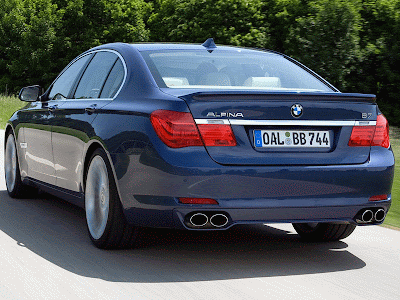
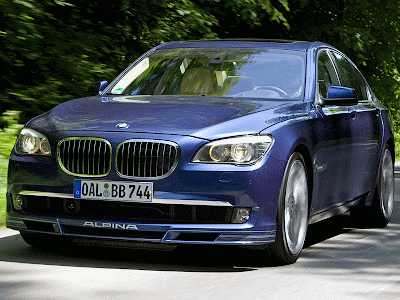
2011 ALPINA B7 BMW luxury Sport Sedan

Both short- and long-wheelbase models will be offered. The BMW ALPINA B7 will make its North American premiere at the 2010 Chicago Auto Show in February, and go on sale at authorized BMW Centers in Spring of 2010. Bmw announced today the prices for the 2011 Alpina B7 for US - $122,875 (standard wheelbase) and $126,775 (extended wheelbase). BMW of North America announced that the BMW ALPINA B7 sedan will join BMW’s North American product range as the most dynamic 7 Series model. The BMW ALPINA B7 represents the second generation of ALPINA automobiles based on the BMW 7 Series to be offered in the US. The first BMW ALPINA B7 was offered as a limited edition for the 2007 and 2008 model years. Newly interpreted and based on the current BMW 7 Series platform, the B7 will again set the benchmark in terms of performance, refinement, technology, luxury and exclusivity. However, Alpina B7 is slightly less powerful that the 760i, but it looks very very sporty and aggressive.
2011 ALPINA B7 BMW luxury Sport Sedan 

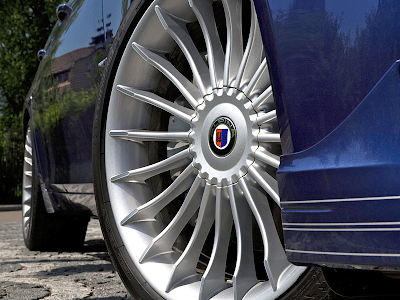
Yielding exquisite levels of power and torque from the twin-turbocharged 4.4 liter V8, and in conjunction with the electronically-adjustable suspension with active roll stabilization, the new B7 promises to offer a spectrum of driving experiences so broad as to be unheard of in this class of automobiles. The evolution of the traditional 20-spoke 21” ALPINA CLASSIC wheels underline the fresh design language found throughout the B7 and impart it a distinctive appearance and powerful stance.
ALPINA – a name famous in Europe and the wider world for putting a particular performance accent on BMWs, though not yet so well-known in North America. BMW – a name famous all over the world for motor vehicles of performance, quality, luxury and safety.
The two companies, both at home in the German state of Bavaria, have a long history of working together to produce special BMW automobiles. Burkard Bovensiepen, son of the founder of ALPINA Business Machines and an enthusastic racing driver/engineer, began his automotive career path in 1961 by developing a dual-carburetor setup for the just-introduced BMW 1500 sedan. It was a predictive beginning: to take an already fine-performing BMW (which also just happened to be a practical sedan) and making it perform even better.
2011 ALPINA B7 BMW luxury Sport Sedan 

By 1964, BMW had officially recognized ALPINA’s contribution to BMW performance. Not long thereafter, Burkard Bovensiepen founded the ALPINA company – ALPINA Burkard Bovensiepen KG – that continues today, creating special versions of BMW automobiles that offer a particular brand of performance for discriminating auto enthusiasts. Yet outside the circle of dedicated BMW enthusiasts, ALPINA has kept a low profile in North America. In addition to racing versions of BMWs, ALPINA has developed a progression of BMW-based cars based on 3, 5, 6, 8, Z4 and Z8 models and offered them on a limited-production basis. ALPINA is located in the small Bavarian city of Buchloe, some 50 miles southwest of Munich, BMW’s headquarters city and the capital of Bavaria.
 2011 ALPINA B7 BMW luxury Sport Sedan 

The B7 is the newest manifestation of the unique BMW-ALPINA synergy – once again based on the BMW 7 Series luxury sedan. Currently, BMW offers ultra-performance models of its 3, 5, 6, X5 and X6 Series developed by BMW M, BMW’s own performance subsidiary. For an ultra-performance version of the 7 Series – a vehicle defined by luxury and generous interior space – something other than “M” performance character was called for. In recent models, ALPINA has concentrated on delivering very high levels of performance with moderate rpm ranges and automatic transmission. Most appropriately, the new BMW ALPINA B7 applies this philosophy to the newest 7 Series to produce a luxury sedan of stunning performance. “A 7 Series Beyond,” one might say.